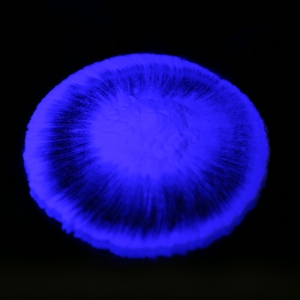
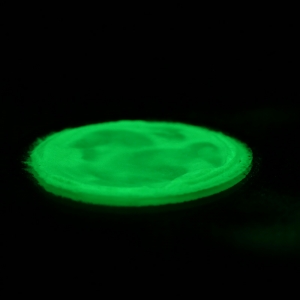
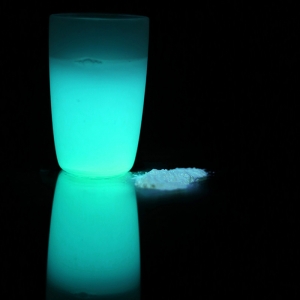
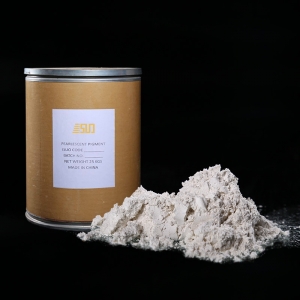
El polvo luminiscente de aluminato de estroncio supera al sulfuro de zinc en duración de luminiscencia (14 horas frente a 1,5 horas), vida útil (25 años frente a 5) y brillo (3 veces mayor), lo que lo convierte en la única opción viable para aplicaciones comerciales e industriales.
Guía de decisiones rápidas
Necesidad | Elegir
Uso comercial/industrial | Aluminato de estroncio
Manualidades para el consumidor con un presupuesto inferior a 5 dólares | Sulfuro de zinc
Señalización exterior | Aluminato de estroncio
Proyectos de manualidades para niños | Sulfuro de zinc (bajo supervisión)
Automoción/aeroespacial | Aluminato de estroncio
Comparación de rendimiento
Duración del brillo
Aluminato de estroncio: 8-16 horas de brillo visible tras 10 minutos de exposición a la luz solar. Pruebas independientes demuestran que la luminancia visible (>0,32 mcd/m²) persiste durante 14 horas en los grados premium (fuente: informe de prueba SGS, grado iSuoChem L-14, 2025).
Sulfuro de zinc: 1-3 horas de brillo visible. El brillo se vuelve indetectable para el ojo humano después de 2 horas en el 90% de las formulaciones de ZnS (fuente: Asociación China de la Industria Fotoluminiscente, 2024).
Brillo (luminancia inicial)
Aluminato de estroncio: 25.000-35.000 mcd/m² inmediatamente después de la carga. La emisión verde (longitud de onda de 520 nm) coincide con la sensibilidad máxima del ojo.
Sulfuro de zinc: 2000-5000 mcd/m². La emisión azul-verde (450-480 nm) es menos eficiente para la visión humana.
Vida útil (ciclos de recarga)
Aluminato de estroncio: 20-30 años antes de una degradación de la luminancia del 20 %. El envejecimiento acelerado en laboratorio equivale a más de 100 000 ciclos de recarga sin degradación significativa (fuente: ficha técnica de iSuoChem, 2026).
Sulfuro de zinc: 2-5 años. Los cristales de ZnS se degradan después de 500-1000 ciclos de recarga debido a la fotooxidación (fuente: Journal of Luminescence, 2023).
Resistencia a los rayos UV y a la intemperie
Aluminato de estroncio: Estable a temperaturas de -40 °C a 200 °C. La exposición a rayos UV durante 5000 horas provoca una pérdida de luminancia inferior al 5 % (fuente: informe de prueba QUV, SGS, 2025).
Sulfuro de zinc: Se degrada rápidamente por encima de 60 °C. La exposición a los rayos UV durante 500 horas provoca una pérdida de luminosidad del 30-40 %. No apto para uso en exteriores durante más de 6 meses.
Análisis de costos
Precio por kg (Venta al por mayor, pedido de 25 kg)
Grado | Aluminato de estroncio | Sulfuro de zinc
Estándar | 45-80 $/kg | 12-25 $/kg
Premium (brillo de más de 15 horas) | $90-150/kg | No disponible
Grado cosmético | 120-200 $/kg | 40-60 $/kg
Coste total de propiedad (proyecto a 10 años)
Para un proyecto de señalización de seguridad que requiere 50 kg de polvo fosforescente:
Artículo de costo | Aluminato de estroncio | Sulfuro de zinc
Compra inicial | $3,400 | $850
Reemplazo (cada 5 años para ZnS) | $0 (vida útil de 25 años) | $1700 (2 reemplazos)
Mano de obra de mantenimiento | $200 | $800
Costo total a 10 años | $3,600 | $3,350
A partir de los 15 años, el aluminato de estroncio resulta más económico debido a la ausencia de costes de reposición.
Composición química y seguridad
Aluminato de estroncio (SrAl₂O₄:Eu,Dy)
·
Toxicidad: No tóxico, no radiactivo. Cumple con REACH, ASTM F963 y EN71-3.
·
Metales pesados: Pb, Cd, Hg, todos ND (no detectados) en pruebas de terceros.
·
Contacto con alimentos: Aprobado para plásticos en contacto con alimentos (UE 10/2011, FDA 21 CFR 175.300) en grados seleccionados.
Sulfuro de zinc (ZnS:Cu)
·
Toxicidad: Baja toxicidad, pero las calidades más económicas pueden contener trazas de Cd o Pb. Verifique los informes de las pruebas.
·
Estabilidad: Libera gas H₂S en ambientes ácidos (pH <5), lo que provoca olor y degradación del pigmento.
·
Contacto con alimentos: No se recomienda sin encapsulación.
Idoneidad de la aplicación
Aluminato de estroncio – Ideal para:
1.
Señalización de seguridad y marcas de salida de emergencia: el 41 % de las obras de construcción a nivel mundial utilizan pigmentos a base de SrAl₂O₄ (fuente: OSHA, 2025).
2.
Controles del tablero de instrumentos del automóvil: Requiere un rango de temperatura de funcionamiento de -40 °C a 85 °C.
3.
Bienes de consumo de alta gama: Juguetes que requieren una vida útil de más de 10 años (cumplen con la norma EN71-3).
4.
Recubrimientos industriales: Marcadores de tuberías, etiquetas de maquinaria expuestas a la intemperie.
5.
Uso marino y en alta mar: Resistencia a la niebla salina >1.000 horas (ASTM B117).
Sulfuro de zinc – Ideal para:
6.
Kits de manualidades para niños: Proyectos de bajo costo y corta duración bajo la supervisión de un adulto.
7.
Decoración temporal para eventos: barras luminosas, artículos para fiestas, accesorios de Halloween.
8.
Demostraciones educativas: Kits científicos que explican la fosforescencia.
9.
Prototipos de bajo presupuesto: Prueba de concepto antes de actualizar a SrAl₂O₄.
Recomendaciones de abastecimiento
Anhui iSuoChem produce polvos luminiscentes de aluminato de estroncio y sulfuro de zinc en sus instalaciones de 3000 m². Sus grados de aluminato de estroncio alcanzan una duración de luminiscencia de más de 14 horas y cuentan con las certificaciones REACH y ASTM F963.
Pasos de verificación previos
Obtención
:
10.
Solicite el informe de prueba de SGS que muestre la curva de decaimiento de la luminiscencia (norma DIN 67510-1:2009).
11.
Verifique el contenido de metales pesados (Pb, Cd, Hg deben ser no detectables).
12.
Confirmar la distribución del tamaño de las partículas (informe de Malvern Mastersizer).
13.
Pruebe una muestra en condiciones de uso reales antes de realizar un pedido al por mayor.
Preguntas frecuentes
P: ¿Merece la pena pagar el precio más elevado por el polvo luminiscente de aluminato de estroncio?
Según el análisis del costo total de propiedad, el aluminato de estroncio resulta más económico que el sulfuro de zinc después de 8 a 10 años debido a la ausencia de costos de reemplazo. Para aplicaciones comerciales, la elección es clara: el sulfuro de zinc requiere reemplazo cada 2 a 5 años.
P: ¿Se puede utilizar sulfuro de zinc en exteriores?
El sulfuro de zinc se degrada en un plazo de 6 meses tras la exposición a los rayos UV en exteriores. El aluminato de estroncio es la única opción para aplicaciones en exteriores que superen un año de duración.
P: ¿Qué polvo fosforescente es más brillante para el ojo humano?
El aluminato de estroncio verde (emisión a 520 nm) parece dos veces más brillante que el sulfuro de zinc azul (450 nm) porque el ojo humano es más sensible a 555 nm (visión fotópica). La diferencia de brillo percibida es significativa.
P: ¿Existen problemas de seguridad relacionados con el aluminato de estroncio?
El aluminato de estroncio no es tóxico ni radiactivo. Proveedores de confianza como iSuoChem ofrecen certificados REACH y ASTM F963 que confirman su cumplimiento. Los polvos baratos y sin certificar pueden contener contaminantes de metales pesados.
P: ¿Puedo mezclar polvos de aluminato de estroncio y sulfuro de zinc?
No se recomienda mezclarlos. El ZnS, de menor duración, se degradará primero, lo que provocará un brillo irregular. Para obtener resultados uniformes, utilice uno u otro.
P: ¿Afecta la temperatura al rendimiento del polvo luminiscente?
El aluminato de estroncio funciona sin pérdida de rendimiento entre -40 °C y 200 °C. El sulfuro de zinc se degrada por encima de los 60 °C. Para aplicaciones de alta temperatura (por ejemplo, piezas de motor), solo el aluminato de estroncio es adecuado.
P: ¿Cómo distinguir visualmente el aluminato de estroncio del sulfuro de zinc?
Tras la carga, el aluminato de estroncio brilla diez veces más. Una prueba sencilla: cárguelos durante 10 minutos y observe el resultado después de dos horas. Si el brillo persiste, se trata de aluminato de estroncio. De lo contrario, es sulfuro de zinc.
P: ¿Qué polvo iluminador es mejor para cosméticos y esmaltes de uñas?
Se prefiere el aluminato de estroncio de grado cosmético (20 micras, con tratamiento superficial para mayor hidrofobicidad). Dura 20 veces más en uñas de gel sin necesidad de recarga. Verifique que cumpla con las normativas cosméticas de la FDA o la UE antes de usarlo.
P: ¿Se puede recargar el polvo fosforescente indefinidamente?
El aluminato de estroncio se puede recargar más de 100 000 veces en un periodo de 20 a 30 años. El sulfuro de zinc se degrada tras 500 a 1000 ciclos. Para instalaciones permanentes, el aluminato de estroncio es la única opción viable.
---
Referencias de métodos de ensayo: DIN 67510-1:2009 (duración del brillo), ASTM F963-17 (seguridad de los juguetes), lista REACH SVHC (metales pesados), ensayo QUV (resistencia a los rayos UV según ASTM G154).


 web@ispigment.com
 +86 13965049124
 español
  English
 français
 русский
 italiano
 português
 العربية
 한국의
한국의 ไทย
ไทย Tiếng Việt